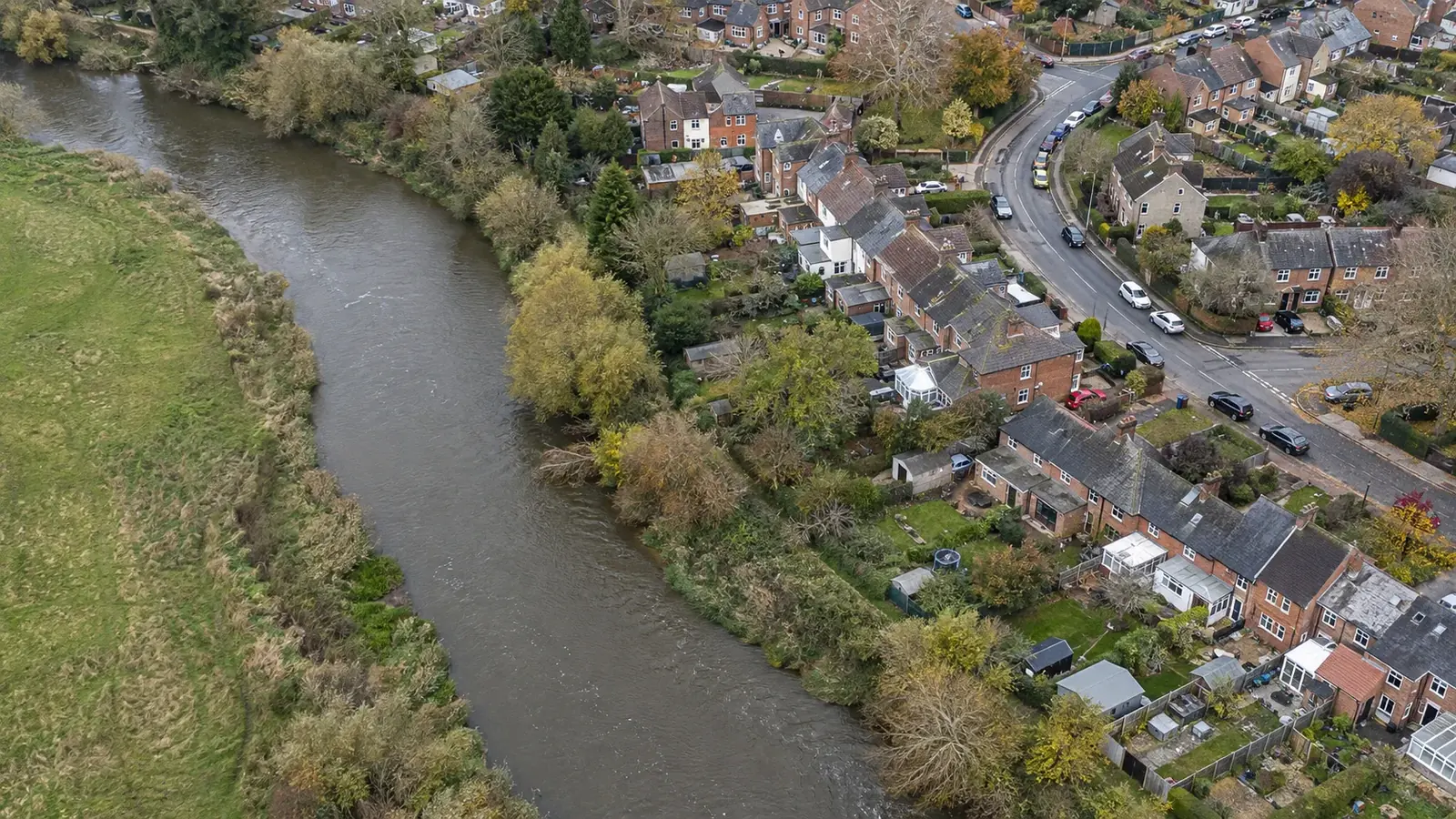
A house is only as sound as the ground it stands on. Before the kitchen and the garden, there is the question of what the land has been through: floods, spills, old tips and the shape of the ground itself.
Flood risk
Flooding is the one risk that can change what a home is worth, what it costs to insure and whether a lender will touch it.
- What we do
- We place the address against the official flood mapping and say plainly what it shows.
- Worth knowing
- A screening of the area, not a survey of the property. Surface water and groundwater flooding are different risks.
Storm overflow
When drains are overwhelmed, water companies are permitted to discharge sewage into rivers and streams. Living beside one is a different proposition from living beside a clean brook.
- What we do
- We look for nearby overflow points and how often they have recently spilled.
Historic landfill
Ground that was once a tip can release gas and settle unevenly. Mortgage valuers and surveyors do ask.
- What we do
- We check whether the address sits on or near a former landfill site.
- Worth knowing
- England only for now. We don't yet screen Wales, and we say so rather than show a false all-clear.
Contaminated land
Some land carries a legacy of industry that makes it unsafe to dig, grow food on or build over.
- What we do
- We check the address against the official record of seriously contaminated sites.
- Worth knowing
- That record is deliberately narrow, so a clear result is not a guarantee. Ask your solicitor about the ground.
Hills & terrain
A steep street changes how you walk to the shops, how you cycle and how a bad knee feels in January.
- What we do
- We look at how the ground rises around the address and how steep the streets are.
The pavement shows you the slope. It won't show you the rest.